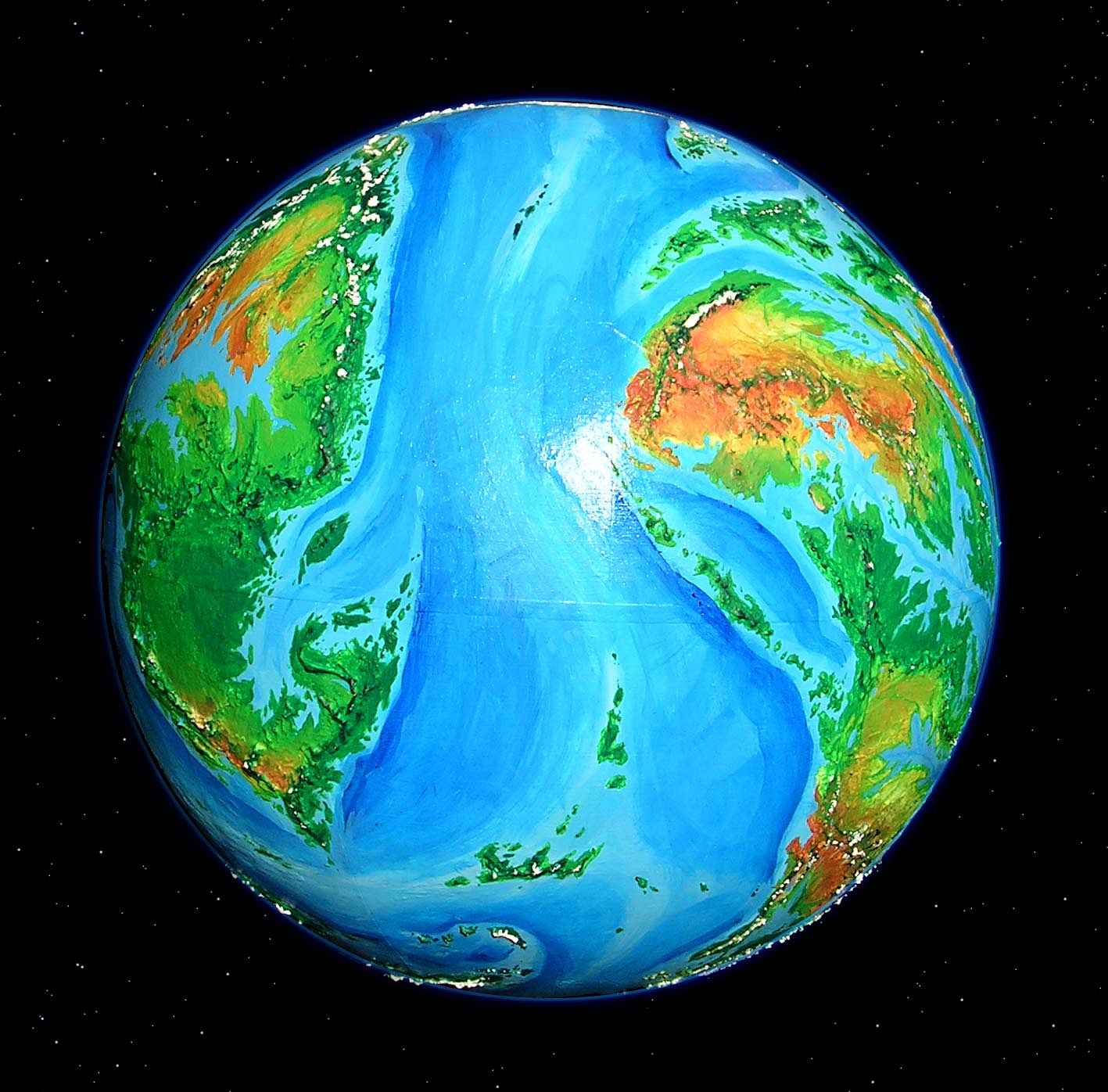
The Curl 9 Islands and
the Rift-Junction Isles
by Chris Wayan, 2006
Pegasia's homepage - Map - Geography & climate - Evolution - Critters - Gazetteer - Sketches - More worlds? Planetocopia!
First-time orientation--strongly advised! Pegasia is weird.
(these islands don't have proper names yet; their sound should reflect the biology of the intelligent creatures that either discover them or evolve on them, and we don't know yet who they'll be. You tell me.)
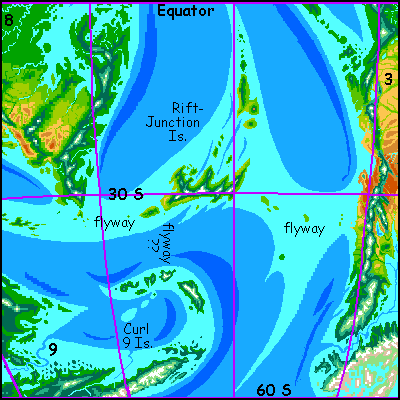
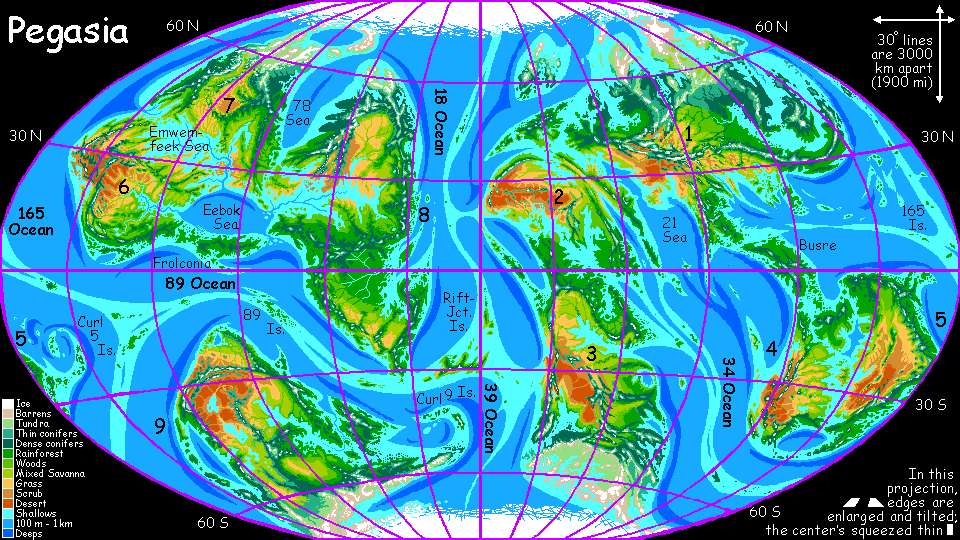
The two archipelagoes, though very different in appearance, have a common cause: a fork in the mid-oceanic rift. In the south, the Curl 9 Islands are a compression feature; in the north, a second archipelago, the Rift-Junction Isles, arose directly on the rift line: a spreading zone.
Do these islands create a migration bridge between hemispheres? Probably; much of the life on Pegasia will be winged. The Curl 9 Islands are easily reached from Continent 9 by island-hopping; no single flight is much over 500 km (say, 6 hours at 90 kph/50 mph, a reasonable cruising speed for a large flier). Similarly, the Rift-Junction Isles are most easily reached from Continent 3; no flight is over 600 km (7-8 hours); again, perfectly feasible even for fliers who aren't migratory specialists like geese. And the final hop west from the Isles to Continent 8 isn't that much worse.
So there is the possibility of an east-west flyway here. But north-south? The gap between the two archipelagoes is a good 1000 km. While still crossable, it's less likely to have been discovered; and it's one of only two possible gateways to Continent 9. Continent 9's only solid link to the outside world is via the south-polar landbridge, at least as harsh as our Bering Strait. It's looking more and more like the most isolated continent of all--more so than the Inner Hemisphere cluster (upper left). At least they have this east-west flyway. Whoever "they" are. You tell me
THE CURL 9 ISLANDS
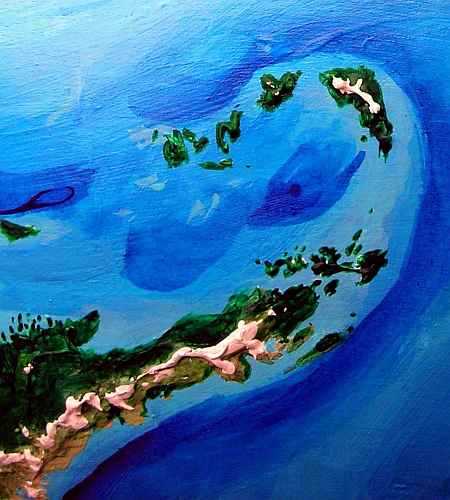
This archipelago curls into a hook--indeed, nearly a spiral. This is land under pressure! Two rift zones are squeezing it steadily inward. Volcanoes dot the archipelago, relieving some of the pressure. Madagascar, the Seychelles, Reunion and Mauritius form a similar "curl" in our Indian Ocean, for much the same reason.
Pegasian tectonics are more active than Earth's. Less internal heating from radioactives, for Pegasia's composed of lighter elements; but the tidal stress is higher. A three-way tug-of-war between sun, Zeus and Tharn! The heat's dispersed both by volcanoes and many active spreading zones. The seas resemble our Atlantic--a sinuous rift zone flanked by low basins. And they're all similar widths--hence, probably similar ages. Did a big impact wake up the whole planet, a quarter of a billion years ago?
Traces of previous rifts, ridges and sea-basins are now scrunched inside the new continental clusters, rather like the twisted undersea ridges of the Mediterranean or Indonesia. Pegasia doesn't experience much continental drift any more, for its copious continental rock's run out of places to drift to; Pegasia suffers continental crunch. Rather than carry continents peacefully along for the ride, like Australia, the expanding sea-floor slips under most coasts, building high coastal ranges... and volcanoes. The Curl 9 Islands are a classic "scrunched arc." And not unique; have a look at the Isles East of 5.
Description of the culture--oh, wait, how can we know that before we know what species they are? How can you have your pudding if you haven't eaten your beets?
We don't need no education,You know the final refrain by now: You tell me what species they are!
we don't need no guacamole! etc...
THE RIFT-JUNCTION ISLES
The archipelago north of this, a chain nearly the size of Japan along the mid-oceanic rift, is quite different: much hotter, for one thing. The Curl 9 group is temperate, from 40-45 degrees south, where winter snow dusts even the coastal hills, if rarely reaching sea level. But the Rift-Junction Isles sprawl from 30 degrees nearly up to the equator: more Caribbean than Boston.
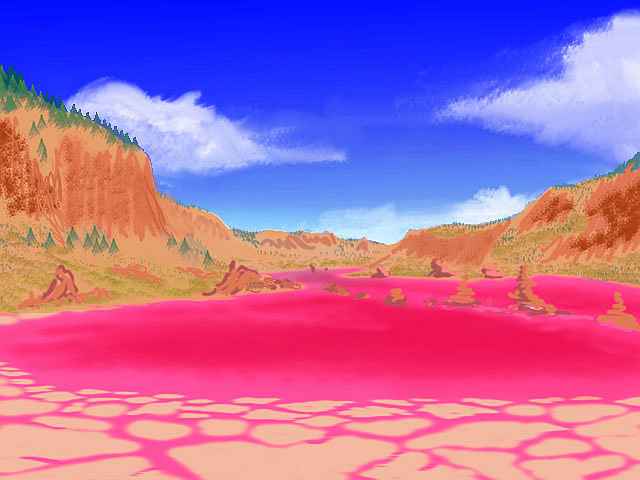
The Rift-Junction Isles are hotter annother way, too: geologically. This is an active spreading zone, as in East Africa. It's strange country, with mud volcanoes, meandering escarpments and rifts dotted with luridly stained mineral-rich lakes: a land unfinished. Here's one lurid, bacteria-stained rift lake--just one of a chain of them, along the fault on the main island. Each will have its own color and grotesque thermophilic biota...
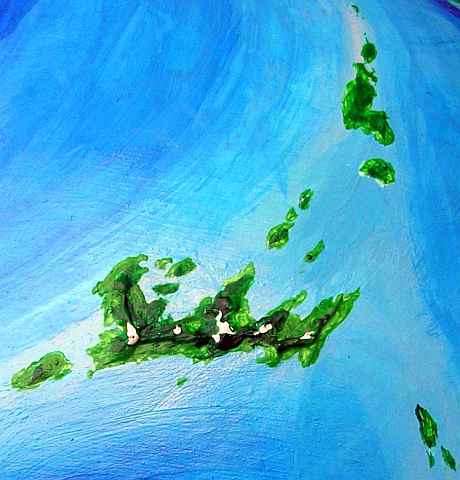
And deep biological isolation--as deep, on Pegasia, as you can get--has magnified the land's geochemical strangeness. Storm-blown strays from three continents have collected, speciated, grown island-innocent, dwarfed, or huge and flightless... (but which? Island populations diverge, but in such an unpredictable environment, which way will they go?)
Hmm, still can't figure them out. All I'm sure is they'll be oddballs and strays.
But not forever. Eventually, intelligent mainlanders will arrive--probably on the wing, not by ship. And once they do, they won't found little kingdoms in isolation for a thousand years, as on Hawaii! Islet chains reach nearly to Continent 3, Continent 8 and Continent 9.
So despite their Hawaiian isolation, in the end the Rift-Junction Isles will become as cosmopolitan as modern Hawaii, and for the same reason: not just a scenic paradise full of New Zealand oddities, but a vital stopover on trans-hemispheric flights.
Here's a bluff-top sketch of the harbor on that narrow sound in the middle of the west coast of the Big Island. The red accents down by the water are the terracotta roof-tiles of the dockside district. Lots of clays, gluey muds and natural cements on these grinding, bubbling islands!
But shipping--with ships, I mean--is just a sideline here. Notice those un-Terran clifftop buildings in the distance? Beacons and landing pads for tired fliers! This may be a Bronze Age airport, but it's an airport just the same.
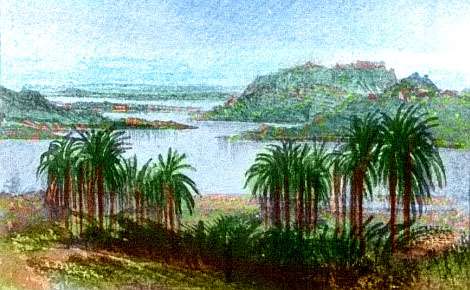
Just subtract the baggage checks, in-flight movies... and the planes.
The gazetteer will have a full index of native placenames, with descriptions--once the contests's over and we have natives to name them.
World Dream Bank homepage - Art gallery - New stuff - Introductory sampler, best dreams, best art - On dreamwork - Books
Indexes: Subject - Author - Date - Names - Places - Art media/styles
Titles: A - B - C - D - E - F - G - H - IJ - KL - M - NO - PQ - R - Sa-Sk - Sl-Sz - T - UV - WXYZ
Email: wdreamb@yahoo.com - Catalog of art, books, CDs - Behind the Curtain: FAQs, bio, site map - Kindred sites