 Planetocopia: Tech Corner
by Chris Wayan, 2006
Planetocopia: Tech Corner
by Chris Wayan, 2006
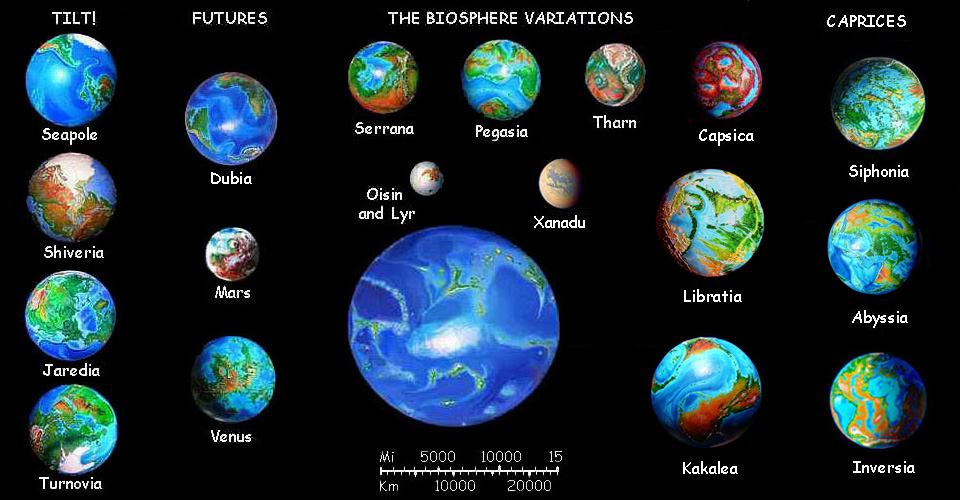
This page lists the physical details of Planetocopia's world-models. The chart shows only key factors affecting life; boldface flags unusual situations sculpting life on that world. Each world's home page has more details. In most columns Earth=1.
| NAME | Mass | Diam. | Grav | Temp. | Air pressure | % O2 & avail. O2 | CO2: ppm | Surface area | Water by vol | % Land & Sea, and total land area | Day length |
Character
| EARTH | as a benchmark 1
| 12,750 km
| 1 G = | 10 m/s, 5 m/s2 288°K | 15°C 60°F 1 atm
| O2: 20% | Avail O2: 1 CO2 350 ppm
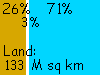
| 500 M km2, | 196 M mi2 ca. 109 km3
| 
24 hr day
| Interglacial. Many sentients; one ape has tech monopoly
| TILT!
| SEAPOLE
| 1 Earth mass
| 1
| 1 G
| 293°K | 20°C 68°F 1 Atm
| O2: (20%), | avail O2 1 CO2 300 ppm | 1
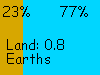
| 1
| 
24 hr day
| Sea level up 110 m; mild maritime climate
| SHIVERIA
| 1 Earth mass
| 1
| 1 G
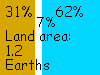
| 283°K | 10°C 50°F Avg 1 atm | but up to 2 in Medit. Abyss 20% O2, | avail O2 2 in Abyss CO2: 250 ppm
| 1
| 1
| 
24 hr day
| Ice; sea drops 140 m; sapient birds evolve in Mediterranean Abyss
| TURNOVIA
| 1 Earth mass
| 1
| 1 G
| 288°K | 15°C 59°F 1 atm
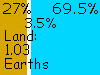
| O2 20%, | avail O2 1 CO2 250-300 ppm
| 1
| 1
| 
24 hr day
| green Sahara, dry China, Scandinavian icecap
| JAREDIA
| 1 Earth mass
| 1
| 1 G
| 286°K | 13°C 56°F) 1 atm
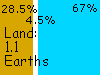
| O2 20%, | avail O2 1 CO2: 300 ppm
| 1
| 1
| 
24 hr day
| Tropical land belt, ice-free Antarctica
| FUTURES
| DUBIA
| 1 Earth mass
| 1
| 1 G
| 294°K | 21°C 70°F 1 atm
| O2 22% | Avail O2 1.1 CO2: 700 ppm!
| 1
| 1
|
24 hr day
| Greenhoused! | Sea up 110 m; coasts flooded, poles fertile MARS REBORN
| 0.11 Earth mass
| 0.53 (6800 km)
| 0.38 G
| 282°K | 9°C 48°F Avg: 0.5 | Hellas: 1 Tharsis 0.2 O2 30%. | Avail. O2: avg. 0.7 Hellas 1.5 CO2 3000 ppm
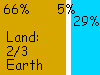
| 0.28 | (140 M km2) 0.05? Ice imports probably unneeded
| 
24.6 hr day
| terraformed; many sentient species
| VENUS UNVEILED
| 0.8 Earth mass
| 0.95 (12,100 km)
| 0.9 G
| 298°K | 25°C 77°F 3.6! | 7.5% O2 | avail O2 1.4 CO2 70 ppm?
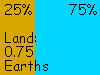
| 0.9 | (450 M km2) 0.3, all imported ice
| 
336 hrs (14 days)
| terraformed, ring-shielded; dozens of sentient species
| THE BIOSPHERE VARIATIONS
| SERRANA
| 0.33 Earth mass
| 0.75 (9600 km)
| 0.65 G
| 292°K | 19°C 66°F 0.67 atm
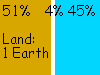
| O2 21% Avail O2 0.7 CO2: | 900 ppm 0.56 | (280 M km2) 0.07
| 
16 hr day
| 6-8 sapients, cooperative anarchism
| LYR
| 7 Earth masses
| 2.2 | (29,600 km at equator) tropics 1.23 G | poles 1.4 G 294°K | 21°C 70°F 6 atm
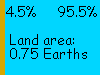
| O2 12% | Avail O2 3.5 CO2: | 150 ppm 5 Earths! (109 km2)
| 13
| 
12 hr day
| Scattered lands in vast world-sea, 19 sapients (mostly fliers)
| OISIN
| 0.04 Earth mass
| 0.39 | (5000 km) 0.3 G
| 203°K | -70°C -94°F (air) .034 atm
| 50% O2 | Avail O2 0.1 CO2: | 1200 ppm 0.15 | (77 M km2) 0.2! | Wet, for a tiny moon 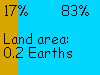
128 hr day
| Europa plus light! Abundant sea life under thin ice
| THARN
| 0.25 Earth mass
| 0.66 (8300 km)
| 0.59 G
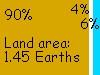
| trenches | 27°C, plains 17°C, uplands 2°C trenches | .4 to .5 atm plains 0.24 atm uplands 0.1 atm 21% O2 | Avail O2: trenches .5 plains .25 uplands 0.1 CO2: | 3000 ppm 0.43 | (216 M km2) 0.002! Dry! 1/500 of Earth's
| 
48 hr day
| 13 sapients in Earthlike trenches and Martian uplands
| PEGASIA
| 0.5 Earth mass
| 0.9 (11,300 km)
| 0.63 G
| 293°K | 20°C 68°F 1.6 atm
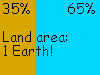
| O2 22% | Avail O2: 1.76 CO2: | 200 ppm 0.82 | (415 M km2) 0.25
| 
48 hr day
| Contest! | Invent the natives! XANADU
| 0.06 Earth mass
| 0.48 (6120 km)
| 0.26 G
| 120°K | -153°C -244°F 2 atm
| O2 0.1%. | Reducing atmosphere CO2: | 0 ppm 0.22 | (115 M km2) ethane not water | 0.01 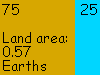
18 hr day
| Cold ecology, ethane not water: a wetter Titan
| CAPSICA
| 0.45 Earth mass
| 0.75 (9600 km)
| 0.67 G
| 353°K | 50°C 122°F 2.4 atm
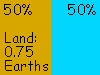
| O2 21%. | Avail O2: 2.52 CO2: | 600 ppm 0.5 | (265 M km2) 0.1
| 
30 hr day
| Earthlike uplands, HOT lowlands
| LIBRATIA
| 1.15 Earth masses
| 1.12 (14,350 km)
| 0.915 G
| 283°K, | 10°C, 50°F dayside 22°C, 72°F 3.2 atm
| O2 16% | Avail O2: 2.5 CO2: | 320 ppm 1.25 | (625 M km2) 0.22
| 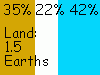
96 hrs rotation; day length infinite
| Tidelocked! Steamy patch, Earthlike ring, icy nightside
| KAKALEA
| 1.52 Earth masses
| 1.12 (14,2950 km)
| 1.22 G
| 287°K | 14°C 58°F 0.6 atm
| O2 16%. | Avail O2: 0.48 CO2: | 450 ppm 1.25 | (640 M km2) .5
| 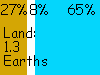
18 hr day
| Earthlike, but mostly desert, sea and ice
| CAPRICES
| INVERSIA
| 1 Earth mass
| 1
| 1 G
| 286°K | 13°C 55°F Basins 1.8 atm, uplands .65
| O2 24% | avail O2 2.2 in basins CO2: | 300 ppm 1
| 0.08
| 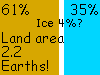
24 hr day
| Our continents are Inversia's seas
| SIPHONIA
| 1 Earth mass
| 1
| 1 G
| 289°K | 16°C 62°F Deeps 1.6 atm, Uplands .7
| O2: 20%
| CO2: | 350 ppm 1
| 0.1?
| 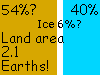
24 hr day
| steamy, rugged abysses, cold ex-continents
| ABYSSIA
| 1 Earth mass
| 1
| 1 G
| 293°K | 20°C 68°F 1 atm
| O2: 22%; | avail O2 1.1 CO2: | 300 ppm 1
| 1
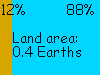
| 
24 hr day
| low island-continents in coral seas
| SUMMARY | Extremes among the worlds, then the ratio between high & low
| Mass: | 0.04 to 7.0 Ratio: 180! Diam.: | 0.39 to 2.2 Ratio: 5.64 Gravity: | 0.26 to 1.41 Ratio: 5.4 Temp: | 120°K to 323°K (-244 to 122°F) Ratio: 2.69 Air pressure | 0.034 to 6.0 Ratio: 176! Oxygen: | 0 to 24% Avail O2: 0 to 3.5 CO2: 70 to 3000 ppm | Ratio: 43 Area: 0.15 to 5 | Ratio: 33.3 Water: 0.002 to 13 | Ratio: 6500! Land: 4.5-94% | Ratio: 22 Land area: 0.2-2.25 earths Ratio 11.25 Day: 12 to 336 hrs | Ratio: 28 Wide ranges of wet/dry, size, air pressure | Gravity and temp narrower. | ||||||||||||||||||||||||||||||||||||||||||||||||||||||||||||||||||||||||||||||||||||||
|---|---|---|---|---|---|---|---|---|---|---|---|---|---|---|---|---|---|---|---|---|---|---|---|---|---|---|---|---|---|---|---|---|---|---|---|---|---|---|---|---|---|---|---|---|---|---|---|---|---|---|---|---|---|---|---|---|---|---|---|---|---|---|---|---|---|---|---|---|---|---|---|---|---|---|---|---|---|---|---|---|---|---|---|---|---|---|---|---|---|---|---|---|---|---|---|---|---|---|---|---|---|---|---|---|---|---|---|---|---|---|---|---|---|---|---|---|---|---|---|---|---|---|---|---|---|---|---|---|---|---|---|---|---|---|---|---|---|---|---|---|---|---|---|---|---|---|---|---|---|---|---|---|---|---|---|---|---|---|---|---|---|---|---|---|---|---|---|---|---|---|---|---|---|---|---|---|---|---|---|---|---|---|---|---|---|---|---|---|---|---|---|---|---|---|---|---|---|---|---|---|---|---|---|---|---|---|---|---|---|---|---|---|---|---|---|---|---|---|---|---|---|---|---|---|---|---|---|---|---|---|---|---|---|---|---|---|---|---|---|---|---|---|---|---|---|---|---|---|---|---|---|---|---|---|---|---|---|---|---|---|---|---|---|---|---|---|---|---|---|---|---|---|---|---|---|---|---|---|---|---|---|---|---|---|---|---|---|---|---|---|---|---|---|---|---|---|---|---|---|---|---|---|---|---|---|---|---|---|---|---|---|---|---|---|---|---|---|---|---|---|---|---|---|---|---|---|---|---|---|---|---|---|---|---|---|---|---|---|---|---|---|---|---|---|---|---|---|---|---|---|---|---|---|---|---|
A table like this is poetry to nerds like me. Well, more than poetry. Striptease! The illustrated web tours are like a floral-print dress; here are the naked numbers underneath. And I'm as shy about them as I am of my naked skin. Be gentle on me, O my Nerdish people! These figures are inevitably rough.
Be especially forgiving of the factors contributing to average temperature: insolation (solar output and mean distance), albedo (amount of sun absorbed: affected by the different reflectivity of clouds, bare rock, water, ice), and greenhouse effects (air pressure and content, especially methane, water vapor and CO2). I know what temperature I want; I'm crude about rigging the inputs to get it.
"Average worldwide temperature" can be deceptive. Some worlds have wide temperature spreads that the average conceals (Libratia); some are sharply two-tier (Inversia, Serrana, Siphonia and Capsica) or even three-tier (Tharn).
One apparent inconsistency isn't. CO2 levels don't always correlate with the strength of the greenhouse effect. If it looks wrong, check the total air pressure! 3,000 ppm of nothing much is still nothing much. Another culprit is insolation (solar energy), not listed above; several high-CO2 worlds are fairly far from their suns, preventing a runaway greenhouse effect: less sunlight to trap.
I have geographic doubts, too. As I've found better maps of Earth's sea floor and seen how rugged it is (and how most maps smooth it out) I've come to doubt my drier worlds have enough volcanoes on their basaltic plains. Worlds with extensive shallow seas, like Pegasia, should be richer in islands; those with wide dry plains, like Serrana and Tharn, should have more rain-catching, freestanding peaks and ranges. I over-relied on Venus's picture: many vents, but few high peaks. But Venus is so hot, the rock's more elastic and lava's slow to cool; so most volcanoes are broad and low. On my much cooler worlds, it ain't necessarily so. Rather than go back and alter the earlier worlds, Siphonia and Abyssia try to show Earth's true undersea complexity.
More essays on climatology and terraforming:
More planetology, climatology and terraforming: