Siphonia: Antarctic Plateau
by Chris Wayan, 2006-9
Siphonia - map - regional tours - People, Creatures - Evolution - (don't click yet: Gazetteer - Glossary) - more worlds? Planetocopia!
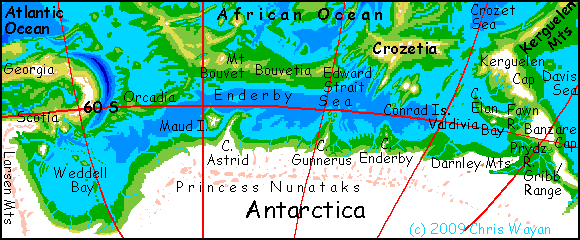
ANTARCTIC PLATEAU
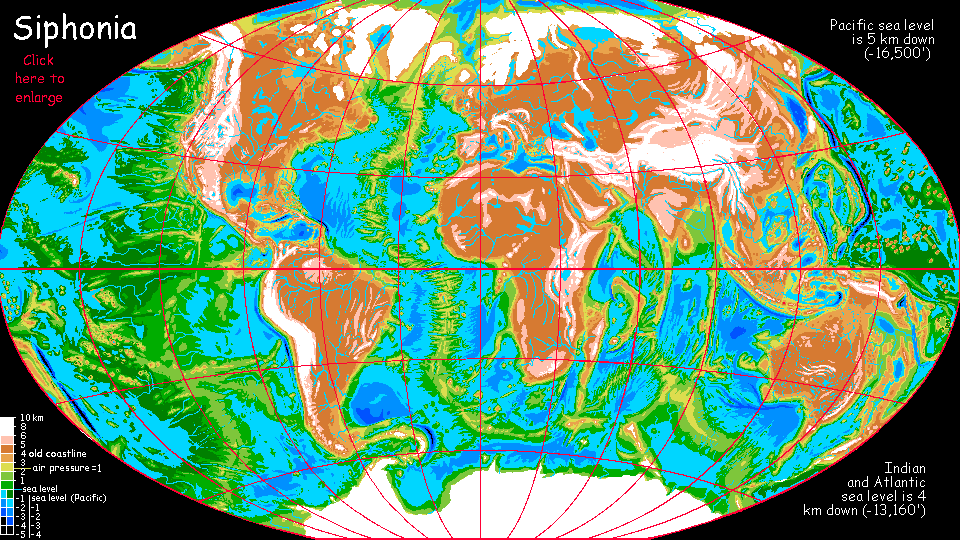
Funny how things work out. I expected to be writing an article on the hellish Martian conditions in the new Antarctica--much thinner air (already thin, on that high plateau, but now Himalayan or worse), even worse temperature-swings (winter cold snaps that freeze CO2 right out of the air?).
Wrong, wrong, wrong. If Antarctica were like Tibet, a rocky plateau three miles high straddling the pole, we'd have it: Norse hell on Earth. But it's ice, and ice is slippery stuff. In the first years after the Big Slurp, the drop in sea levels did create a little Mars here--deadly cold and dry. But that meant the blizzards spent themselves on the slopes at the rim, never reaching that stratospheric ice plain--it was just too high, the air too thin.
And it starved. The glaciers crept outward and the plateau subsided until it was low enough so at least a little new snow fell. Not at all coincidentally, that balance-point is where the air pressure and temperature were roughly what they had been. The ice cap averages only a kilometer thick today. Nunataks--those lonely rocks and spires piercing the cap--grew and merged into raw rocky ranges.
ANTARCTIC COASTS
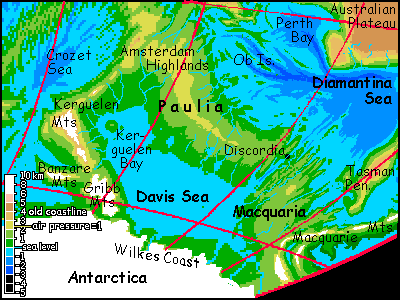
Conditions around the rim of Anarctica would seem strange to us. The continent rises even taller than today, averaging over 5 km above the new sea level, and the temperature difference is larger too: the deep sea-basins with their dense air are much warmer than the old Antarctic shore.
That temperature- and altitude-gradient makes for stormy weather! Much of the year, katabatic winds sweep down from the ice, strangely warm from compression but bone-dry; yet in summer, this forces the warm sea-air high up into thunderheads. Hailstorms pummel the coasts, and the dense air is so warm it thaws the hail into heavy rains.
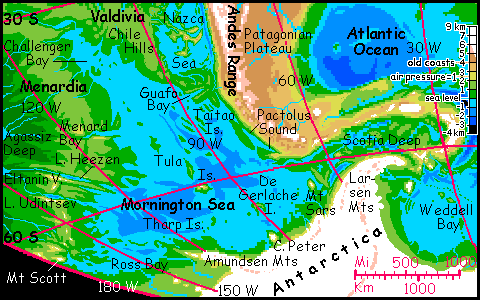
So tundra flourishes as high as a kilometer up the Antarctic slopes; low trees even huddle in sheltered spots on the coast, and thrive on Cape Astrid, Maud island, and the Kainan Islands off Cape Gunnerus. It's habitable, if Nordic--more like Iceland than Greenland. The best analogy, though, is from the last Ice Age, when tundra thrived right up to the foot of the ice.
WHY RAVENS DON'T CRY WOLF
Humans could and probably will live here, then. But they won't be alone. Arctic wolves already have brains as big as chimps', probably with more sophisticated language abilities. Siphonia offers much wider habitat for them--Siberia and the north polar basins, but the long icy mountain-chain of the Rockies/Andes is a land-bridge of habitat over the equator to these Antarctic shores. Expanded populations, deep time, and possibly genetic tweaking have synergized to breed Siphonian wolves larger and far longer-lived than any on Earth, with nearly human-sized brains and stubby thumbs on their big forepaws.
They're not quite as exotic as their little gliding cousins in the tropical Deeps--the cold favors bigger, stockier bodies too heavy to fly even in the dense air of the Deep. Besides, frostbitten flight membranes are no fun. So these wolves won't be guarding their reindeer herds from their air, riding the katabatic blast like giant falcons; no, it's hard work on foot.
But not lonely work. The scattered reindeer ranches of humans and wolves won't be like the lonely crofts of old Scandinavia. A third species will see to that: intelligent megaravens, a species that needed no helping human hand at all--the rise in air pressure was all it took to remove the cap on their maximum size. Wingspans are now over 3 m (10'); body and brain weights more than doubled; they're not as smart as humans, but smarter. You doubt me? Ask any raven; they'll explain why your very question is stupid, stupid, stupid. Silly monkey!
The avian component of Antarctic society means that news will spread quickly; the whole Antarctic shore may be culturally unified; the ring around the ice may have no cultural center, or need one.
THANK THE GREAT HAIRY MATRIARCH WE'RE OUT OF THE ICELESS AGE!
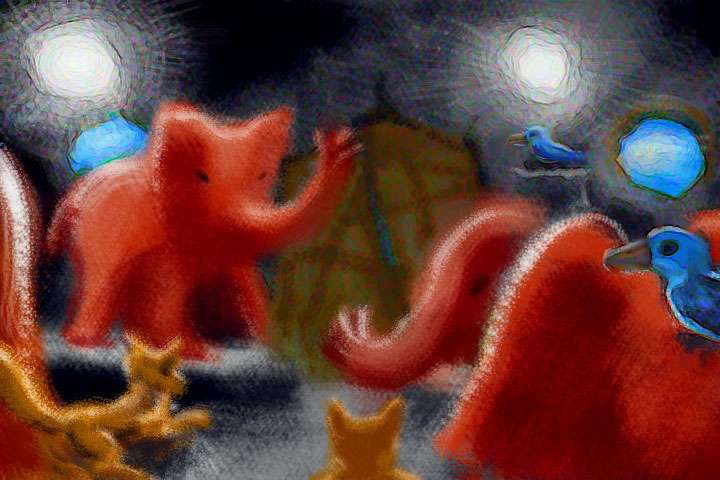
A fourth possible species: mammoths. They'd do as nicely here as in their old northern home. Whether guilty humans re-create them, or tropical elephants simply re-adapt for the cold over time as they spread out from Africa again, I think the long slopes of Antarctica will be grazed by nomadic bands of shaggy red-haired giants.
I don't have to postulate that their brainsize will increase, turning them into people. Elephant brains are already as complex as humans', and as busy, even if we don't recognize what they're doing with them.
Nomadism may keep mammoths a primarily oral culture. But I could be wrong. Elephants at least have the option of building if they're motivated--one-armed giants!--and the winters here certainly favor planners and savers. You can't migrate to lower latitudes, as you can in the steppes and tundra of Asia, Europe and America.
So mammoths, wolf shepherds and megaraven scouts and couriers live together in stone crofts along the coastal strip. To us, they'd seem as strange and archaic as Megalithic dolmens: far too big to call huts, yet casual and crude--built by one-armed giants, after all. Elephant Child castles, built to defend against the only enemy Siphonians know: the climate.
|
|
Siphonia's homepage - map - peoples of Siphonia - Siphonia's evolution - Gazetteer
LISTS AND LINKS: More worlds? Planetocopia! - dreams of other worlds - ecology - climate change - evolution - natural disasters - terraforming - sculptures and 3D art -
World Dream Bank homepage - Art gallery - New stuff - Introductory sampler, best dreams, best art - On dreamwork - Books
Indexes: Subject - Author - Date - Names - Places - Art media/styles
Titles: A - B - C - D - E - F - G - H - IJ - KL - M - NO - PQ - R - Sa-Sk - Sl-Sz - T - UV - WXYZ
Email: wdreamb@yahoo.com - Catalog of art, books, CDs - Behind the Curtain: FAQs, bio, site map - Kindred sites