Otz Trench
by Chris Wayan, 2006-9
Map, Tharn's homepage, Peoples of Tharn, Regional tours, Geology and Evolution, gazetteer, terms explained. More worlds? Planetocopia!
OTZ TRENCH AND ITS INHABITANTS
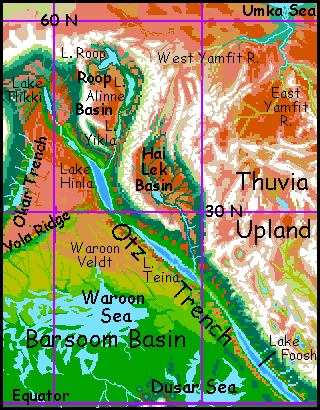
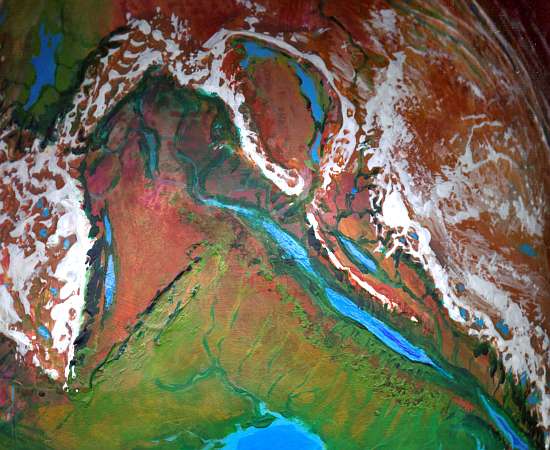
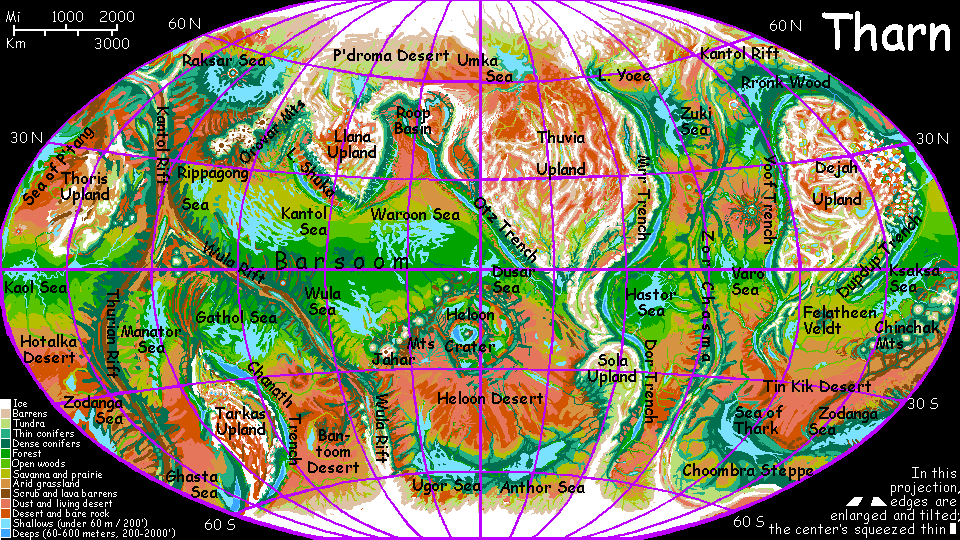
Otz Trench is one of the longest on Tharn--nearly 5000 km (3000 mi). Like most deep trenches, Otz creates its own climate to a large extent, but it runs from the equator up to 50 north, crossing climate zones as it goes. Thus, the southern tip is hotter and more humid than our Amazon, yet the central trench is quite dry, and the far northern branches (though surrounded by deserts, snowy peaks and windy steppes) are mild and fairly green--like great sunken terrariums.
Just as on Earth, regions of Tharn around thirty degrees north and south tend to be high-pressure zones with weak, dry winds blowing westward. If they cross a sea, they'll absorb moisture and generate rain downwind--that's why Florida's green. But if the winds blow from land, even a seacoast at these latitudes will be dry--like Mauritania or Namibia or Western Australia. The middle of Otz Trench is analogous--most of the year, cold dry winds descend from Thuvia Upland to the west, keeping rain away. But in orbital summer, the high pastures of Thuvia warm up and the winds reverse. Storms from rainy Barsoom Basin to the west rain directly into the trench and snag on the bordering mountains, feeding hundreds of steep short streams. Thus, even the central stretch of Otz supports a vibrant ecology--and culture. No, make that cultures.
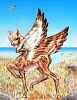
Deep in the trench, the shores of Lakes Hinla, Teina and Foosh are the very heartland for one intelligent species, wingbok, a shy, nervous people resembling winged deer--but with forked prehensile tongues--a hand, in fact. Clumsy? Limiting? But "Many tongues make skilled work," as the wingbok say...
Otz would be ideal for lebbirds too, but very few of that second flying people have trekked into this hemisphere over Trunzip Pass yet.
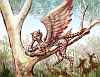 Well, trekked is the wrong word. Trunzip has a dire reputation among lebbirds--with good reason. The pass is nearly 10 km above their native trench, and the air-pressure drop feels much like a climb from Terran sea level to 20,000' does for us. The few lebbirds to dare the pass collapsed; most were carried back out. Only a stubborn handful insisted on being carried through, on animal-back. Most survived without permanent brain damage, but they never dared return.
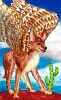 Thus, their descendants in Otz Trench and Heloon Crater are essentially island populations, slowly diverging from their ancestral race to the east; and their numbers are still quite small, except in the south around Lakes Hinla and Foosh.
On the other wing, flyotes are everywhere on Tharn, of course. The only uncertainty is whether we should call them people. The flyotes living down in Otz Trench itself are quite large (and thus large-brained); but packs dwelling in the surrounding mountains and plains are (like plains wingbok) dwarfed and childlike.
If only Tharn had had a little more air! Flight and intelligence wouldn't be quite such... not quite mutually exclusive options. Let's say... competing.
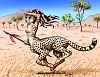
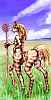
The chief wingless species found in Otz Trench are centahs and veltaurs in the drier stretches, along with bos in the rainy southern end of the trench. Thotters, of course, live along all the lakeshores.
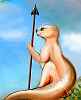
We'll start our tour at the north end, where Otz frays into three arc-basins, analogous to island arcs on Earth: Tlikki, Roop and Hai Lek.
Tlikki Basin
Tlikki Basin is the northern tip of Otz Trench, where it fades into the Gwaa Desert. Lake Tlikki in its center is some 320 km (200 mi) long, but narrow and shallow. Lying only 1.5 km below datum, Tlikki barely qualifies as a trenchlake. The shores are semiarid, with tufa towers up to 100 m tall, much like Pyramid Lake in Nevada.
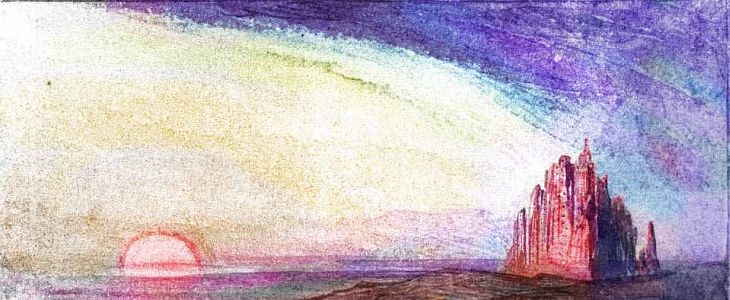
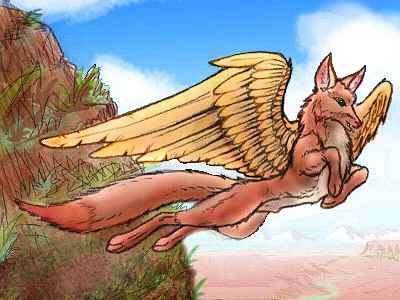
The black specks you see are entrances. Packs of flyotes have burrowed into these natural castles and turned them into surreal skyscrapers. The rock is soft and the work half done by nature. So these crags are honeycombed with rounded, airy apartments--well, togetherments, since flyotes link them all. It's a bit drafty by human standards, since they have no glass for the windows, but flyotes have fur.
And the views are to die for!
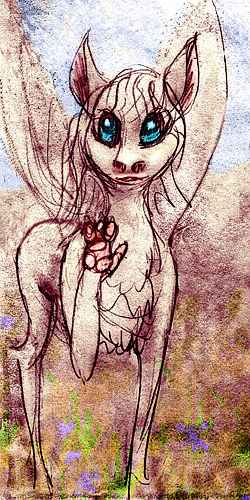
Despite their spectacular homes, these are simpleminded folk, for in such thin air, local flyotes (sketch to left), like local wingbok (to right, below) must stay small to be flightworthy--only 20% larger than their kin up on the plains, who most Tharnians consider merely bright animals. Tlikkians are in between: not quite animals or people.
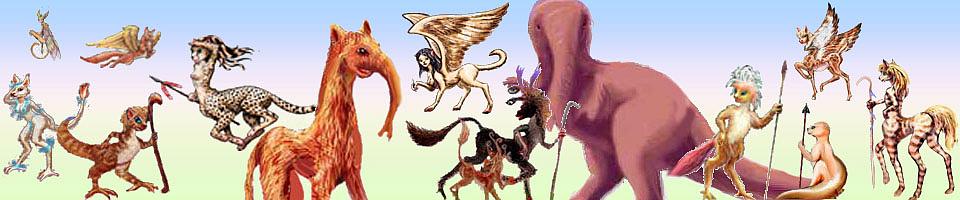
Places like Tlikki are why no Tharnian religion has any parallel to the human denial of evolution. On Tharn the Missing Links aren't missing; they live down the block. It's built into the language: instead of two words, "animal" and "people", Tharnians have a spectrum of terms to describe creatures with various levels of peoplish behaviors, such as:
But there really are such words, shading in the spectrum of wingboks and flyotes, from the bright animals of the plains to fully peoplish subspecies in the trenches. Tharnians of all species freely use them to describe, flatter and insult individuals of other species--just as humans constantly use animal metaphors about each other.
Now where was I? Oh, right, in the middle of that spectrum, among the sort-of-people of Lake Tlikki... So are they? Now you know the answer: your very question marks you as a tourist. A native doesn't ask that; she asks "how peoplish?" and shades the answer, noting their intermediate brainsize, use of ochres for personal adornment and wall-decoration, their appreciation for the weird beauty of the tufa palaces, their ability to tell simple stories and to plan irrigation ditches yet their inability to anticipate salt buildup until they see the first signs... and so on ad infinitum, getting quite as much fun out of arguing the fine points of this as Tharnians do from gossiping about who's mating, who's not speaking to each other, and who's both mating and not speaking to each other (the only form of social entertainment that appears to be truly pan-galactic. If there's language, there's gossip.)
So Tharnians can subtly discriminate a spectrum of intelligent behaviors we can't or don't. Can they also generalize? Sure, and they do: the generic term for "peopleness" is yitlaki--"intelligent sensitivity" is about the best translation I can come up with. But it only sums up all those finely discriminated vectors or factors. Compared to our crude binary classification, Tharn's yitlaki spectrum is a sort of anthropological periodic table. It's a standout example of an invisible social technology.
Tharn looks low-tech, and in our mechanical sense it is; a world poor in many resources and lacking much of our infrastructure. But not all technology involves hardware. Language itself is a software of great power, and this complex terminology Tharnians have developed is nothing like human folk beliefs, like our endless nattering about race and gender. Despite our prejudices and slurs, all human groups have similar brains, skills, and instincts.
If it has yet. Men are from Mars and women from Venus, and Man shall have dominion over all the beasts, and I ain't no monkey's uncle...
Tharnians are far ahead of us at parsing behavior from appearance, and at differentiating intelligent, animalistic and ambiguous behavior. If there were an average Tharnian (now there's a mythical beastie!) she'd be able to read our behavior better than most of us can--and I'm afraid she might classify us as weaker in real yitlaki than those tufa-tower flyotes, despite all our sharp shiny toys. "Good with tools, but they do throw tantrums."
I don't mean to imply that these primitive fliers (see how I slip around saying either 'people' or 'creatures'; either is misleading) are the only natives (ha! another noncommital term) of Tlikki Basin. Nomadic bands of camaroos and mop herders live here as well--both flightless peoples whose size isn't restricted by the thin air. So even my most binary Terran readers, who reject the Tharnian spectrum as scientifically spurious (because we all know intelligence is unitary)... even you can't treat the region as uninhabited, okay? Real, unquestionable, bipedal people. Proper aliens.
They're even engaging in sane, humanoid occupations, like trading caravans and herding dumb animals--not living in wobbly Dr. Seuss castles, daubing red clay lipstick on their coyote muzzles and howling at the moons. Feel better, knowing some Tharnians make sense?
Roop Arc-Basin
Over the mountains east of Tlikki is Roop Basin. It's warmer and more fertile, since most of it is deeper. I did say most! Lake Roop, a shallow irregular lake 500 km (300 mi) wide, lies at the far northern end where the spur of Otz Trench creating the basin trails off. It too is only 1.5 km down (only a mile below "sea level"), so it's inhabited mostly by mops and camaroos. The shores are flat, without coastal bluffs or tufa towers, so flyotes are rare. Full-sized trench wingbok visit and do business, but find flight quite difficult here. They must take care to return home to raise young, further down the trench, lest their fawns turn out stunted and retarded like the Tlikki wingbok. We say "Nice place to visit, but no place to raise a kid", but we rarely mean it as literally as wingbok do. Again, our languages have binary terms: habitable or uninhabitable. Neither fits the wingbok predicament in Roop.
Not far to the south, Lake Alinne is another world: no mere outpost between Martian and Terran biospheres, but a vibrant trench civilization. This lake's 480 km long (300 mi) and 3 km below datum (10,000' down). Roop Spur is well-developed here; the trench has air dense enough to support full-size wingbok and large flyotes; thotters, mops, and camaroos live here too, though it's warm for the latter two.
The camaroos are here largely to trade; at the north end of Roop Basin is a major caravan route leading to a low (for the uplands) pass to the West Yamfit River, a major stream whose lower banks are fairly fertile for the subarctic; it's the gateway to the vast subarctic basin around the Umka Sea.
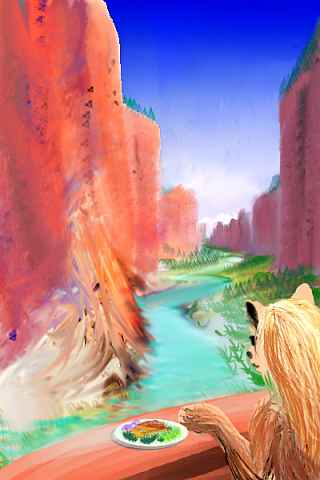
The markets of Alinne also attract less frequent caravans from all over equally vast Thuvia Upland to the east--though it's poor country with little but craftwork to trade. Thuvia's like the orphaned child of Tibet and Mars. Just not much to work with up there. Including oxygen...
The trade between cultures and the five-sided diversity of viewpoints makes the shoreline markets of Alinne (and libraries; Tharnians are quite literate, thank you) the most culturally advanced area we've seen so far. Admittedly, there's been little competition. But that will change.
It's an easy flight downstream to Lake Yikla, the southernmost trenchlake of Roop Basin. Though Yikla's modest-sized, only 320 km long (200 mi), it's fully 3.5 km below datum, agriculturally rich, and just as progressive and prosperous as its larger cousin Alinne. Fewer caravan markets--the camaroos don't like descending this far, it's too hot for them--but Yikla University on the east shore is the region's best by all accounts.
Just south of Lake Yikla, the basin narrows, but Roop Spur continues to deepen; and along the faultline, the Roop River has cut a spectacular canyon down to Lake Hinla in Otz Trench, the "parent" trench. Holes dot the red walls of the gorge, some black, some silvery: windows and doors of flyote cliff-palaces.
Yes, some of these windows have glass--crude, bubbly, but transparent glass. These are tall, big-brained, sophisticated flyotes, and their spectacular eyries, terraced cafes with panoramic windows, streamfed showers and composting toilets are a far cry from the simple tufa caves of their Tlikkian cousins. As are their brains--twice the size, and then some! They seem another species.
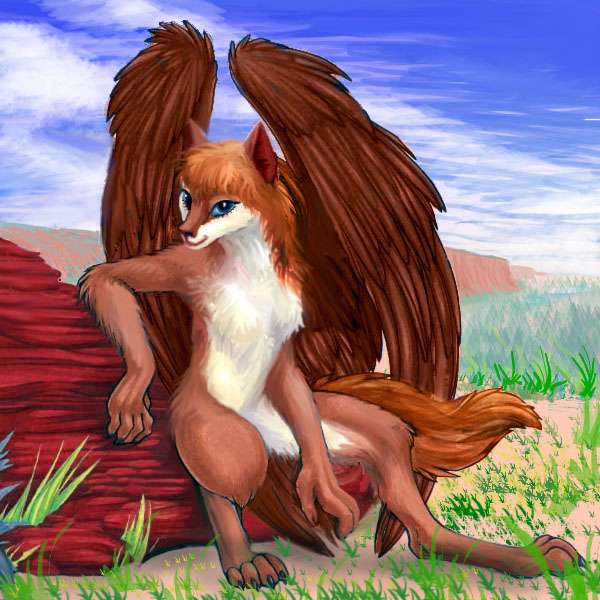
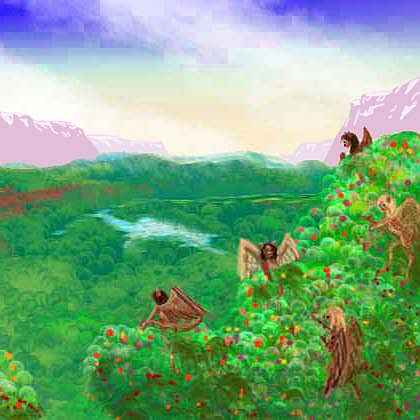
On Earth, species rarely or never spread from one climate to another; and while diet certainly affects a youngster's growth (my home town's full of immigrant families with kids a foot taller than their parents) natural selection is the main driver of species change. But on a tiny, jagged moon like Tharn, even a flightless creature can walk from Martian to Amazonian climate zones in a day or two.
So Tharnian phenoplasticity is a huge advantage, apparently well worth the expense of some complex genetic machinery. What surprises me is that it goes no further: no adult Tharnian vertebrates change size, even over years, in response to new surroundings. Shows you just how difficult/expensive that particular trick is!
Huge Lake Hinla stretches from 30-40 degrees north--some 1100 km (700 mi). Its warm, dense-aired, fertile shores, 6 km below datum (one of the deepest trenchlakes on Tharn) are a world center for wingbok civilization.
Lake Teina and Lake Foosh to the south are slightly higher but still have fertile dense-aired shores where wingbok civilization thrives--and here, especially in the south, the culture's enriched by a minority of lebbirds, that second flying species--relatively recent immigrants from the east. They specialize in orchard-tending and fruitpicking: four clever paws with opposable digits make them far more comfortable up a tree than wingbok will ever be. You try climbing with hooves! (Well, goats manage it, but Satan has granted them spidey-powers or something.)
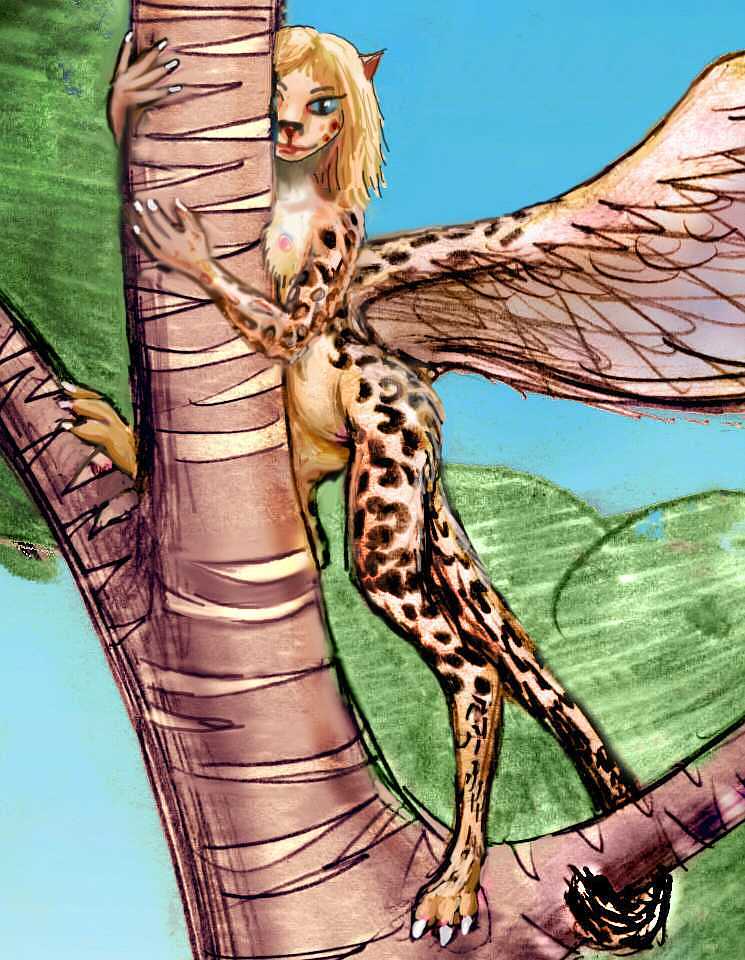
You'd think the two species would rarely even meet. Lebbirds are arboreal forest- and jungle-dwellers who rarely descend to ground level; wingbok prefer dry grasslands, and besides, they're shy. But in larger towns, relations between the two species are slowly changing from businesslike distance to a warm intimacy. Lebbirds aren't Terran cats--our consummate carnivores--but omnivores quite capable of cooking for herbivores. And they have a sunny, outgoing temperament, so lebbird cafes are popular all over Tharn; around Lake Foosh, many music and poetry venues have lebbird hosts and wingbok performers.
Interspecies friendships are no longer rare, but affairs still are. Lebbirds find wingbok quite sexy (like everything that moves), but wingbok find lebbirds sexy but scary (like everything that moves!)
Hai Lek Basin
In contrast to these sophisticated lake cultures in the rich depths, the Hai Lek Basin, a second arc basin south of the Roop complex and east of Lake Hinla over the Yikla Range, is a spur of Otz Trench too. But shallow Lake Hai Lek on its floor is barely below datum. The Hai Lek River flows from the Thuvian peaks at the basin's north end down to the lake, which is 350 km long (220 mi), then on south to Lake Teina in Otz Trench; all in all, the Hai Lek flows 2100 km (1300 mi).
Culturally the region is a frontier; too hot for mamooks, dry for camaroo, and too high for lebbirds or wingbok--only a few herds of their dwarf cousins the plains wingbok roam the basin. The contrast with Roop Basin is extreme. On Tharn, altitude is destiny.
In fairness, if population or cultural innovation determined how much detail each region got, two-thirds of this tour would be on Lakes Hinla, Teina and Foosh. But I've described two similar lebbird-dominated trench cultures in Mrr and Yoof Trenches, so here I'll focus on what makes Otz Trench different: the wingbok.
First, they're a savanna species, like humans; while lebbirds build tree-towns high in the branches of jungles or (in a pinch) irrigated groves, wingbok like open spaces and settle drier lands, building modest, hidden homes (usually by improving rock overhangs or digging into cliff walls like flyotes)--little more than camps and storage sheds. Most of their efforts go into wildflower- and rock- gardens, not shelter; wingbok prefer to sleep outside in anything short of a storm.
Days are spent browsing the land in a mystical communion. The Grass Doe, their version of Mother Earth, speaks to them in tongues--wingbok tongues, I mean. Both taster and hand, it's a sacred instrument--they're nursing from their Mother Tharn, and tasting her will.
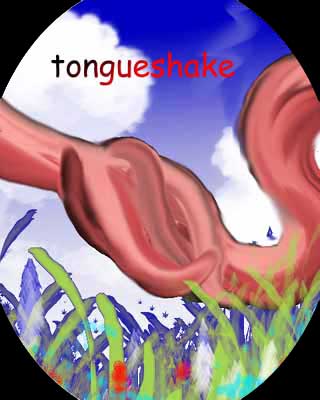
And they seek to taste not only their god. When unfamiliar wingbok meet, they tongue-kiss, tasting each other: the basic gesture of trust.
Shy, nervous and introspective, wingbok communities are an elusive net of sidelong words and glances. Not for them the pomp and roar of mamooks--wingbok fear to scare off the Grass Doe, their mother goddess, who they (naturally) conceive of as a still larger, still smarter, still more sensitive wingbok, with lush grass for fur--a shy goddess frightened of mortals' crudity, one to treat gently as a friend, not worship as a creator.
They also have a male god, the Thunderbuck, all flash and roar, bringer of fertility and rain, but also danger: lightning out on Tharn's great plains can be deadly, for there's little shelter. Wingbok ambivalence toward their Thunderbuck should be familiar to Terrans: it's remarkably like the stormy (oops) relations between humans and their own Hairy Thunderer--whether you call him Thor, Zeus or Jehovah.
But the shy Grass Doe, the wingboks' image of Tharn itself, is their first love. For thunder and rain are sometime things; but the grass goes on forever.
Wingbok of all herds love singing and poetry, and spend days at it. Narrative choral singing, in which each singer adds a line in rotation, is a curious mixture of cooperation and competition--you want to come off as creative, yet not disrupt the group effort.
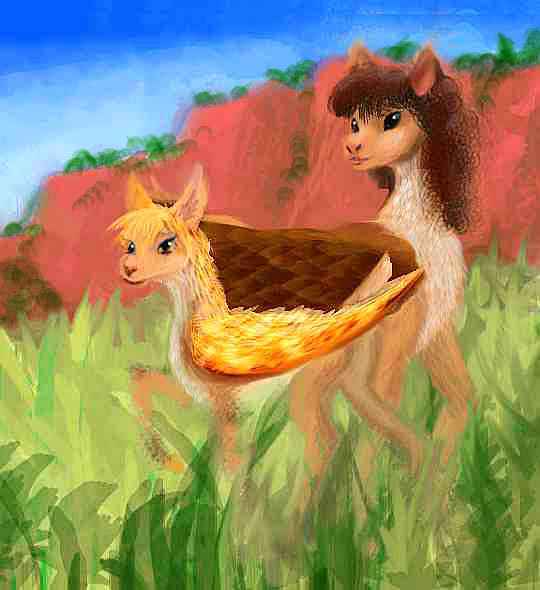
Individual creativity goes all out in dance-poetry festivals, where wingbok dance and chant original stories--subtle tales with little external action but full of complex inner feelings, intuitions and dreams: novelistic, we might say. It's not pure art: there's a practical agenda. Social standing and mate selection is largely based on impressions gained from song, dance and poetry--wingbok of both sexes want a sensitive, flirtatious, humorous, subtle, shy but articulate mate. Yitlaki is their term for this complex, ambivalent virtue-cluster.
These competitions aren't like Terran rap or poetry slams: it'd violate yitlaki to diss others directly, and besides, wingbok are too high-strung to tolerate open conflict--the whole cafe will bolt in a panicky storm of wings, leaving their (probably lebbird) host to sweep up the wind-blown salads and scold the erring performer--if he or she hasn't already fled in equal panic. So direct put-downs are as rare and shameful as fistfights at the opera. Yet there's no question that these quiet, friendly events are subtly competitive.
Of course, there's competition and... competition. No wingbok song-dance night compares to the roaring song-duels of the mamooks, at any midsummer chong-ma! Not that any wingbok can make the comparison; though curious, those who try to attend always bolt. Howling meat mountains set off something hardwired in the nervous wingbok psyche.
LAKE TEINA to FOOSH RAINFOREST
Southeast of Lake Hinla, the trench grows drier; this is a high-pressure latitude with weak winds and little rain. Still, the front of the Otz Range is so tall it squeezes rain from almost any cloudfront passing through; Lake Teina, fed by a hundred mountain streams, is just as big as Hinla. Wingboks still dominate here, but in the shoreline and creekside groves you'll meet lebbirds, arboreal immigrants from the eastern hemisphere.
But the lebbirds really come into their own during the lakeless stretch of trench south of Teina. Here the climate grows muggy; we're nearing the equatorial storm belt, where hot air rises and more rain falls, though there's still a long winter drought. The trees spread away from the rivers until the trench floor is one green strip. These are just a northern finger of Foosh Wood.
By the time you reach equatorial Lake Foosh it's quite hot, for the dense air traps warmth; rainy too, for this moist air hot air rises, to cool and drop rain year-round. It looks and feels Amazonian, except for the Martian cliffs always on the horizon, and the fact you still need your oxygen mask. Lake Foosh is just 2.5 km below bedlevel, barely low enough for lebbirds to fly in and with no more oxygen than an Andean mountaintop. You can survive here, but not exercise without a headache. Wear the mask. You'll need to get used to it for the final leg of our journey. And I do mean leg. Soon you won't be able to fly, either.
But Foosh is a lovely climax to a long trip. You flap (heavily, but safely enough) over the flowering canopy and land each evening on the guest platform of a lebbird inn, high in the trees. Lebbirds rarely descend to ground level. Their whole instinct leads the other way--light and life are always up, in the forest.
The rains are mild but they can get oppressive. Lebbirds here often ride updrafts along the trench walls above the cloud layer just to see the sun. When the clouds break, the view down's not bad either.
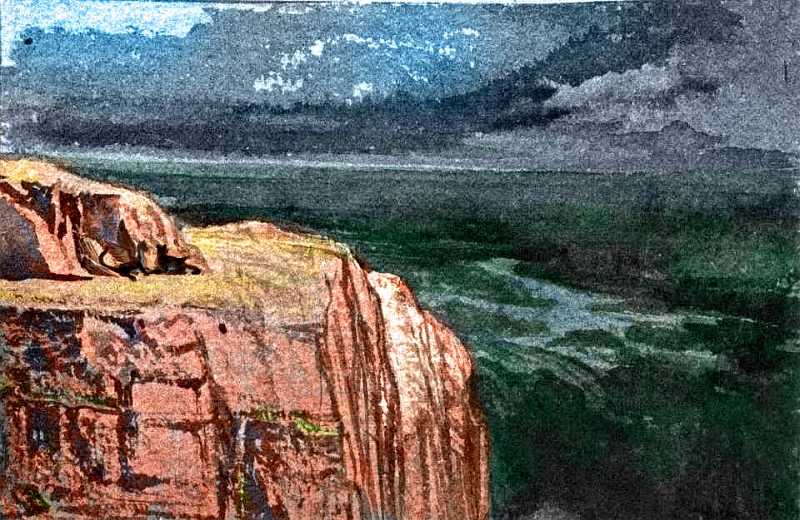
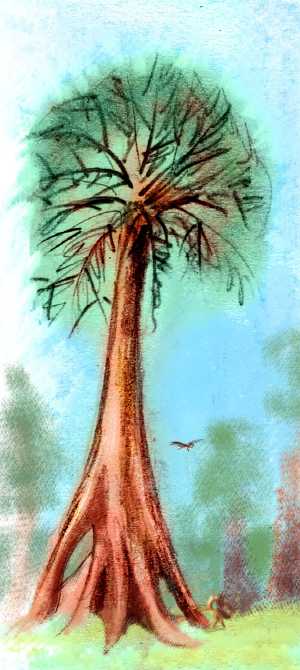 Foosh Wood isn't just rain-lucky. It's relatively wind-sheltered, down in the canyon. This trench air is only half Earth's pressure anyway, so wind-shear is weak; and gravity of course is low. The result? A forest averaging 100 m tall, topping out near 140 m (460'): taller than redwoods, and much friendlier, for these canopies are fruiting, flowering trees carefully tended, lived in, loved.
If heights like these seem excessive, consider: a century or two ago, before logging, there almost certainly were Terran redwoods and possibly eucalypti 130 m tall (400'). The tallest known survivor is 380', and loggers went after the biggest trees first; remnant populations aren't representative.
Still, even 140 meters isn't quite Tharn's record. It's still a mystery why temperate Terran rainforests (like the California redwoods and the Douglas firs on the Olympic Peninsula) have higher biomasses and taller trees than equally rainy tropical forests. Slower rot, so it's easier to spend a thousand years climbing to the record-breaking heights? Less heat, so less transpiration, so less work pumping water up to the crown? Hard to be sure, but the biggest trees, like animals, do favor cool (if not cold) weather. The same pattern's found on Tharn. Its tallest trees are all in cooler, higher-latitude stretches of trench, like northern Yoof--low-gravity cousins of Earth's temperate rainforests.
Days in Foosh can be muggy, but at night the forest cities come alive. In other tours with equatorial trenchlakes, like Lake Hynh? in Yoof Trench, I've described the nightlife a bit; here all I'll say is, do as the natives do. Fly at dawn and dusk, siesta all day, go out to treetop cafes all night. Listen to music, hear a good storyteller, try lebbird drama (character motivation gets peculiar but the acting will grab you by the scruff of your neck!) and most of all, see some ballet. Air-ballet for certain, and love-ballet if you're not squeamish (yes, it involves sex on stage, but as that breaks no lebbird taboos, it's somehow not raunchy. Rather sweet, really).
There's always something happening, and if you don't like it, act on the lebbird proverb: "There are plenty of trees in the wood." Just glide to the next tree. You'll find a new cafe, a new play, band, storyteller, dance marathon...
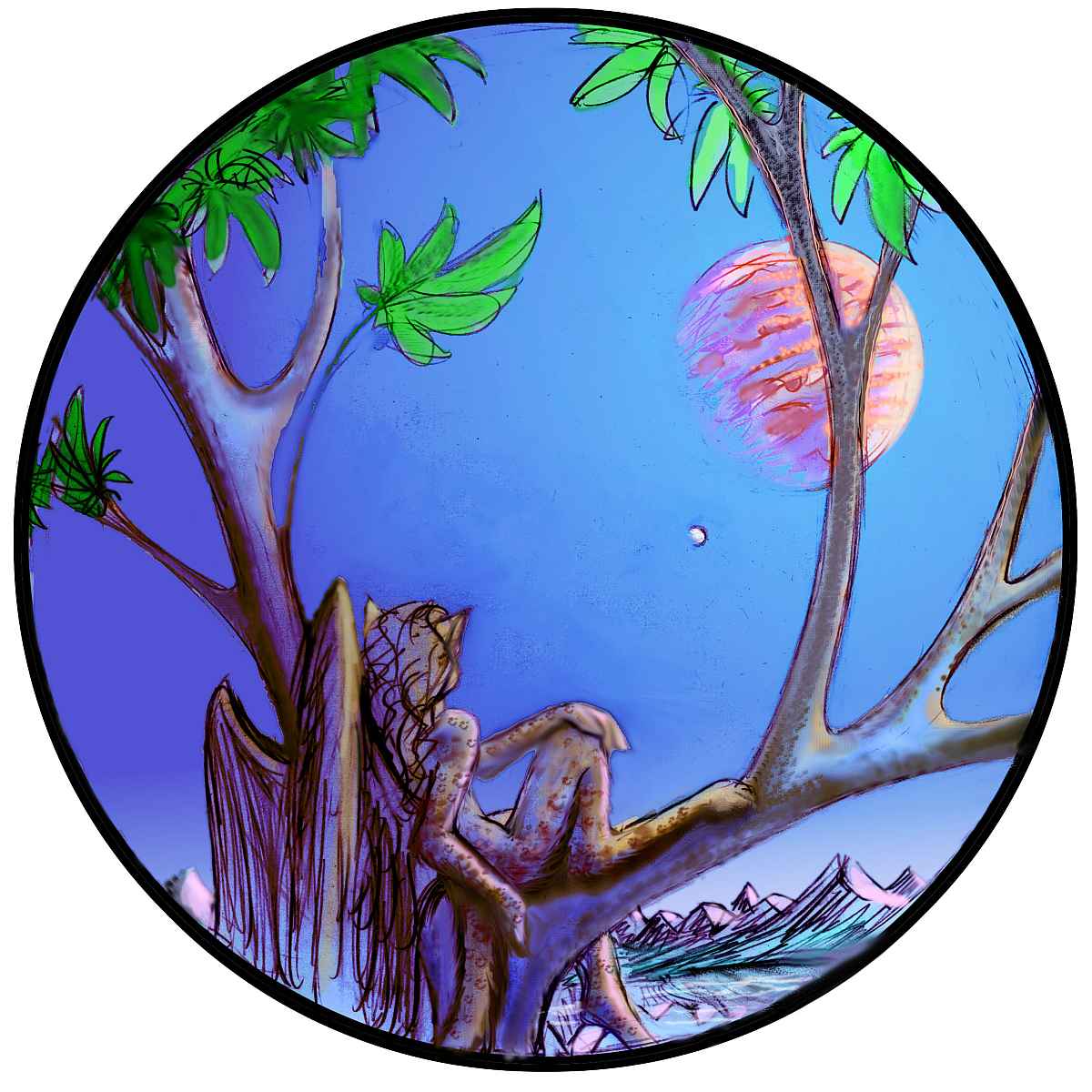
THE DUSAR PROBLEM
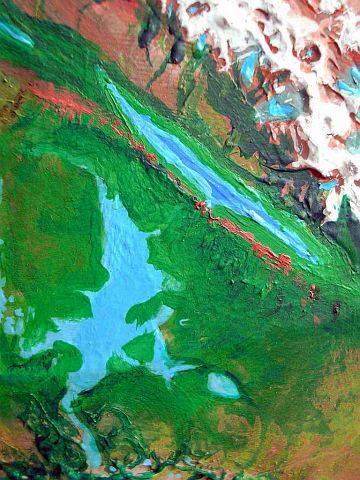
High above Lake Foosh in southern Otz Trench, a time bomb called the Dusar Sea ticks away on Barsoom plain. Dusar straddles the equator in a region humidified by three huge seas, so rainfall is heavy. That rain makes Dusar dangerous. Only modest hills separate the sea from Otz Trench, where steep streams drop to Lake Foosh, 2.5 km (8200') down. These rivers gnaw away at the eastern trench-slopes faster than the meandering streams of the plains. And meanwhile, the plate holding Dusar is creeping toward the trench, and as it bows up into the hills and tilts down into the slope, it tends to crack into canyons and mesas.
If a stream feeding Lake Foosh ever cuts through the hills, with or without the help of cracking, the Dusar Sea will start draining into the trench, probably in a great cataract. The Dusar region's rainy enough to constantly refill its sea, falls or no falls; Lake Foosh will grow until it drowns much of Otz Trench, devastating wingbok civilization there.
The flooding of the Black Sea 8000 years ago probably led to the diaspora of Indo-European speakers, and to our legends of the Great Flood; but unlike the ancient Caucasians, trench wingbok can't just pack up and scatter; they need dense trench air to fly or their fawns will grow up dwarfed and dull--plains wingbok! As the trench fills, their minds will empty...
And the catastrophe won't just be local; the trench may fill to the brim, so the new Otz Sea will merge with Dusar, creating a deep, swollen birdsea, with wide, shallow wings out on the Dusar plains and a long deep trenchlake-body. Such a deep sea is a climatic disaster for all Tharn, for it can hoard a large fraction of the world's water without offering much extra surface area for evaporation. Tharn can survive one or two birdseas (there's one at the moment, the Ghasta Sea), and birdseas do eventually self-destruct (see Black Hole?), but until it does, Tharn will suffer a Dry Age--in some ways worse than our Ice Ages, for at least our climate shifts are cyclic, and our biota's had a chance to get used to them. But Tharn's separate, irregular Dry Ages each cause a massive die-back. This one's still a million years away--but geography says it's coming.
THE END OF OTZ
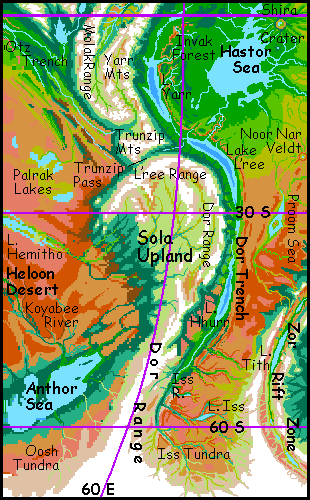
Near the end of Lake Foosh, you cross the equator. Three more muggy days, balmy nights, and flights every dawn and dusk take you over a thousand km along the Zozar River. The rainforest starts to fray. More disturbing, so does the Otz Trench itself. On day four, a great red keel looms before you--a ridge splitting the trench. The eastern fork, containing the Zozar River, seems to bend a bit more, though still nothing like a true river canyon. The Zozar fork rises slowly but steadily, curving until the trench becomes a gash in the flank of southern Thuvia Upland, above bedlevel but still far below Thuvia's heights. The canyon widens into the Bundaroo Sea basin--perhaps the most fertile and interesting part of Thuvia. Upstream of the Bundaroo Sea the canyon frays into many; this region is so jagged and fractured it's hard to distinguish ice, water and faults as the cause for any particular scarp or canyon. Certainly the trench as such is gone--or more likely, is nascent. Thuvia may fracture over time.
But let's stick to the western or Foosh River fork, heading on southeast. Over the next few hundred km it too slowly climbs--from 2.5 km below bedlevel at the end of Lake Foosh, to only 1 km down at ten degrees south. Just as you're getting resigned to using your oxygen mask, it's time for me to deprive you of more: your strap-on wings. The air's just too thin for you to fly in easily. It's back to hiking, I'm afraid. But be patient; we're near the end.
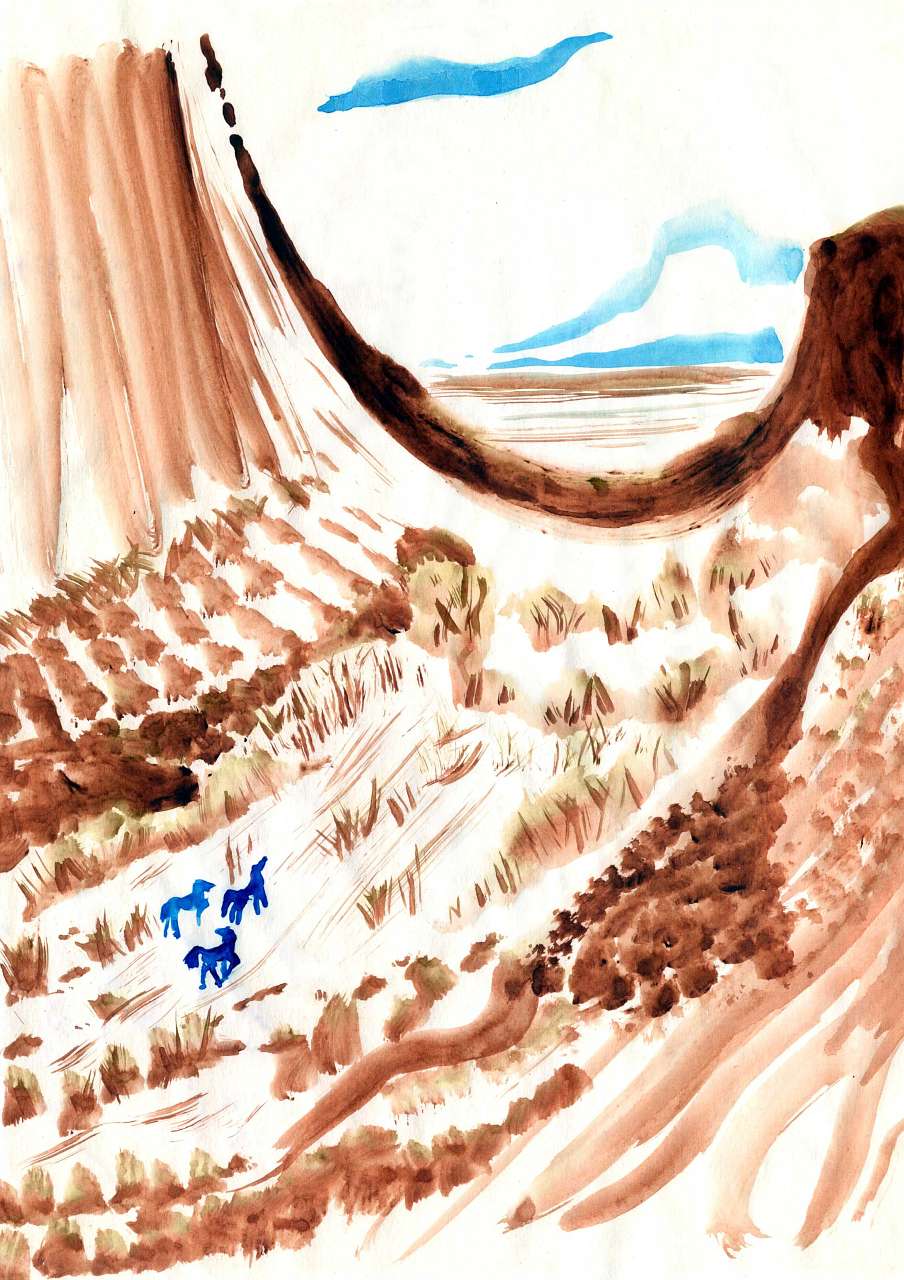
Now this branch, too, starts forking into long canyons with straight ridges between them. Long indeed, on foot. And dusty. This is much drier country; we're on the fringe of the huge Heloon Desert. Trees survive along the Foosh River, and some chaparral on the ridge-heights, but it's a hot, dreary hike. Stick with me, though, a few Tharnian days. This too is a Tharn you should know. Most of the surface, after all, is unflyable.
An inn's coming up. Notice there's been one round every riverbend? Here comes another caravan! Pretty busy for such a barren canyon. Why?
By 15 degrees south, the canyon floor is slightly above bedlevel and still climbing; the air is now as thin as atop Everest. From a subduction trench, the plate border seems to have changed to a strike-slip fault. This region looks something like the Earth's riftzone splitting Baja from mainland Mexico and creating the Sea of Cortez.
As this fault-valley keeps rising it jags east, cutting into the uplands of Molak Isthmus, where Thuvia meets Sola Upland. This rift is far too high to be called a trench any more, but it does have a name, a momentous one on Tharn: Trunzip Pass, the best, busiest, and nearly the only pass between hemispheres, through the mountain walls of Thuvia and Sola Uplands.
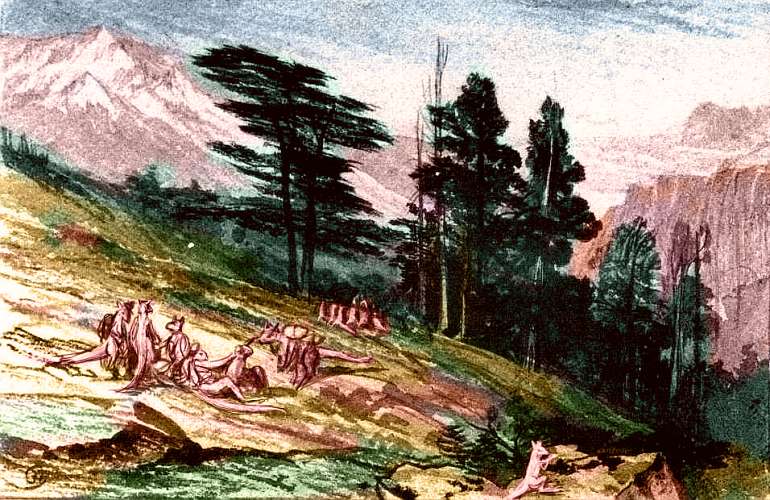
Through this pass a handful of lebbirds rode long ago, breathless, helpless, mere caravan baggage; they barely survived to populate southern Otz Trench. On the far side lies Mrr Trench, their homeland: longer, deeper and more fertile than Otz.
All right, all right. I know your airmask is tedious (do NOT take it off! You've walked out of the atmosphere, as far as your puny Terran lungs are concerned). You don't have to hike on up through Trunzip Pass, though it's beautiful--alpine meadows, red jagged peaks, tropical glaciers, and stars at noon in that purple Martian sky.
But I did want you to feel as the lebbirds did--wonder at the scenery, curiosity about the far side, distress and fear as the air grows fatally thin.
The difference is, you're merely uncomfortable. You have a mask. They had nothing but hope.
World Dream Bank homepage - Art gallery - New stuff - Introductory sampler, best dreams, best art - On dreamwork - Books
Indexes: Subject - Author - Date - Names - Places - Art media/styles
Titles: A - B - C - D - E - F - G - H - IJ - KL - M - NO - PQ - R - Sa-Sk - Sl-Sz - T - UV - WXYZ
Email: wdreamb@yahoo.com - Catalog of art, books, CDs - Behind the Curtain: FAQs, bio, site map - Kindred sites